Research
We seek to understand how biodiversity has evolved across the tree of life and we are especially interested in leveraging phyloinformatics and phylogenomics to pursue these questions at scale. Our research spans from understanding broad patterns of diversification to the detailed mechanisms underlying the evolution of complex traits.
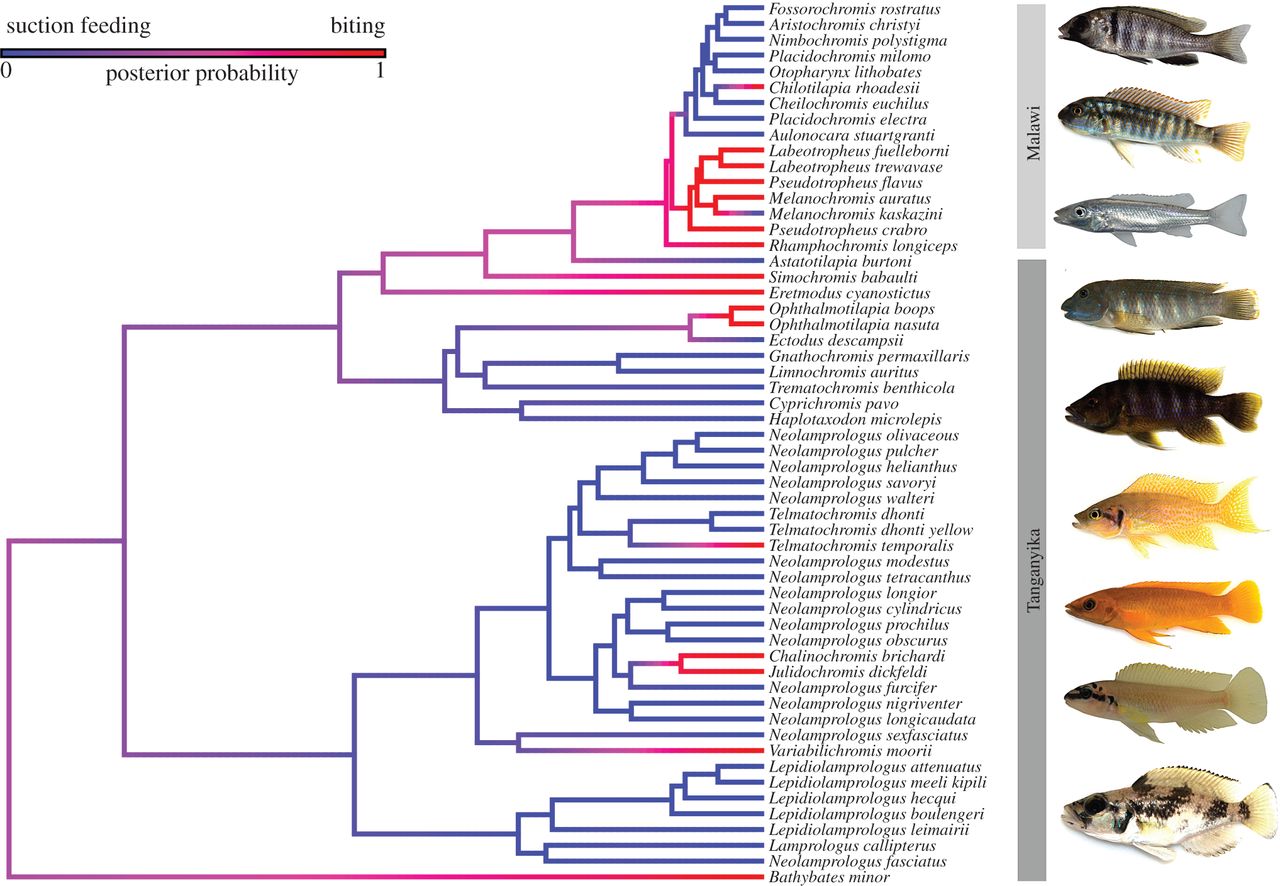
Our lab applies a range of approaches including sequence capture of DNA UltraConserved elements, megaphylogeny construction, crowd-sourced high-throughput phenoscaping, comparative phylogenetic analyses, and simulated evolution. We are especially interested in understanding factors that have shaped diversification in ray-finned fishes.
Color Pattern Evolution and Functional Morphology
A major focus of our research investigates the evolution of color patterns and color reflectance in marine fishes. We examine how fish color diversity has evolved in coral reef systems in response to ecological pressures including predator-prey interactions, signaling, and habitat specialization.
Our recent work on butterflyfishes has revealed that color pattern diversification has accelerated toward the present, raising fundamental questions about the relative roles of selection, drift, and constraint in shaping complex visual signals. We are particularly interested in convergent evolution across lineages, the functional role of spectral reflectance properties, and developing quantitative approaches for analyzing color pattern variation.
Phylogenomics and Macroevolution
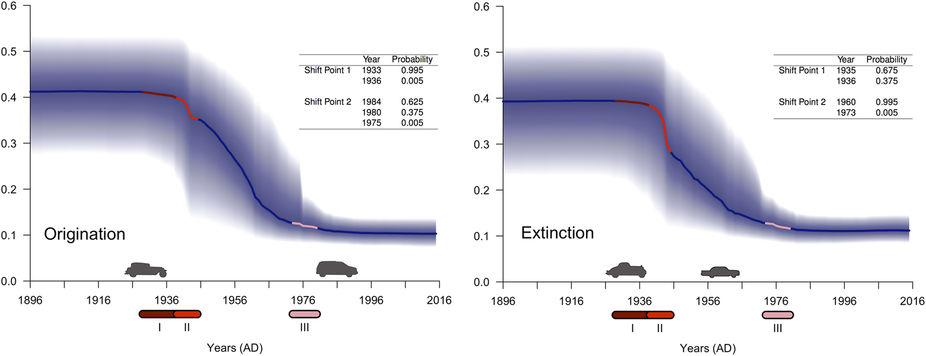
In addition to our work on color evolution, we continue to explore how the tools developed within the field of macroevolution can be applied to understanding cultural and technological diversification, as well as the deep evolutionary history of major fish lineages.